Free
$6.99
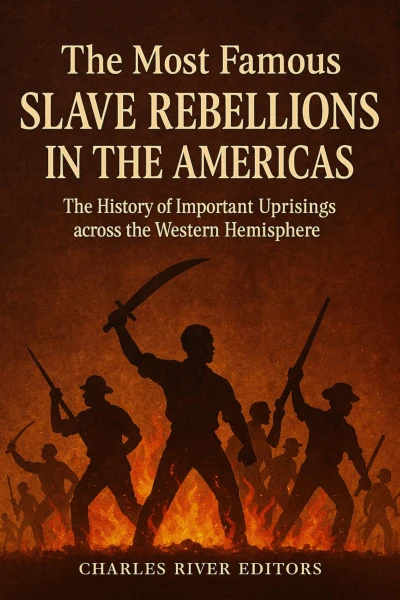
The Most Famous Slave Rebellions in the Americas: The History of Important Uprisings across the Western Hemisphere by Charles River Editors
12/12/2025
The indigenous people of Hispaniola, the Tainos and Arawak, initially greeted Columbus' landing with ambivalence, but as more and more of them were enslaved, and as their country was occupied, they entered a period of precipitous decline. Through a combination of disease, the violence associated with enslavement and general assimilation, they had virtually disappeared from the landscape within a century. Meanwhile, as the Spanish colonists looked around them, searching for a means to exploit this great discovery, and as the occupation spread to the mainland and the interior of South America, the early search for minerals yielded to the establishment of a plantation economy, with an emphasis initially on sugar, and later cotton, coffee, indigo and other crops.Thus, even by the 16th century, slaves were being imported to Hispaniola, and over the next few centuries, the population of African slaves came to represent a sizable majority of the population there. This would set the stage for one of history’s most unique revolutions.Between the arrival of first slave ship in Virginia in 1619 and the Emancipation Proclamation in 1863, there were more than 250 incidents of rebellions by 10 or more slaves on present-day United States territory, dating as far back as the 1739 Stono rebellion in South Carolina. But the German Coast Uprising in 1811 was the largest act of armed resistance against slavery in American history, and more than 100 slaves died during or as a result of the German Coast Uprising, whereas fewer than 30 were killed in action or as punishment for Nat Turner’s uprising. The 1811 insurrection also involved the largest mix of slave participants, combining African- and American-born slaves, and both men and women. The rebels of 1811 were inspired to a great degree by the most successful slave uprising in history, which had occurred the previous decade in the French colony of Saint Domingue (modern Haiti). There, thousands of enslaved workers there launched an organized rebellion, expelling all whites from the territory and establishing an independent state. The German Coast Uprising was also inspired by charismatic, powerful, and dedicated leaders, including Charles Deslondes, a mulatto slave driver, and two African soldiers, Kook and Quamana, who had only recently arrived in Louisiana from Africa on slave ships.When President Thomas Jefferson went ahead with the Louisiana Purchase, the balance of Congressional power became a hot topic in the decade after the purchase. Slavery in the United States was a monstrously cruel system of exploitation, and its victims tried in every way they could to oppose it. This included everything from subtle acts such as insubordination, laziness, or petty theft to more serious efforts like running away, sabotaging tools, self-injury, or the highest form of protest, violent revolt. Despite proponents’ portrayal of slavery as a simple part of idyllic country life, hundreds of efforts by slaves to escape demonstrated that most slaves were not content and yearned to be free. As the issue of slavery roiled the country, few people became as controversial or consequential as Nat Turner, who was one of millions of slaves in the South before the Civil War but ultimately led the nation’s most notorious slave uprising. In August 1831, Turner led a rebellion that terrorized Virginia for several days, killing dozens of whites and freeing slaves as his band moved from plantation to plantation. The Richmond Enquirer reported, “A fanatic preacher by the name of Nat Turner (Gen. Nat Turner) who had been taught to read and write, and permitted to go about preaching in the country, was at the bottom of this infernal brigandage. He was artful, impudent and vindicative, without any cause or provocation, that could be assigned.”
Amazon - US
Amazon - UK
Amazon - CA
Amazon - FR
Amazon - ES
Amazon - IT
Amazon - NL
Amazon - JP
Amazon - BR
Amazon - MX
Amazon - IN
Book Length: 150-320 Pages